Hands-On MySQL Replication: Building a Two-Node Cluster with Podman
· 10 min read

In this tutorial, we'll build a small MySQL replication environment locally using Podman.
We'll create two independent MySQL servers:
In this tutorial, we'll build a small MySQL replication environment locally using Podman.
We'll create two independent MySQL servers:
When working with embeddings in LangChain4j, you might have noticed that many models are available in two flavors:
-q suffix)But what’s the actual difference between them, and which one should you choose? Let’s break it down.
While working on a full-stack Spring Boot application, I needed to develop a React-based frontend and serve it alongside the backend. To streamline the development and build processes, I decided to manage the frontend as a submodule within the same Gradle project using the gradle-node-plugin.
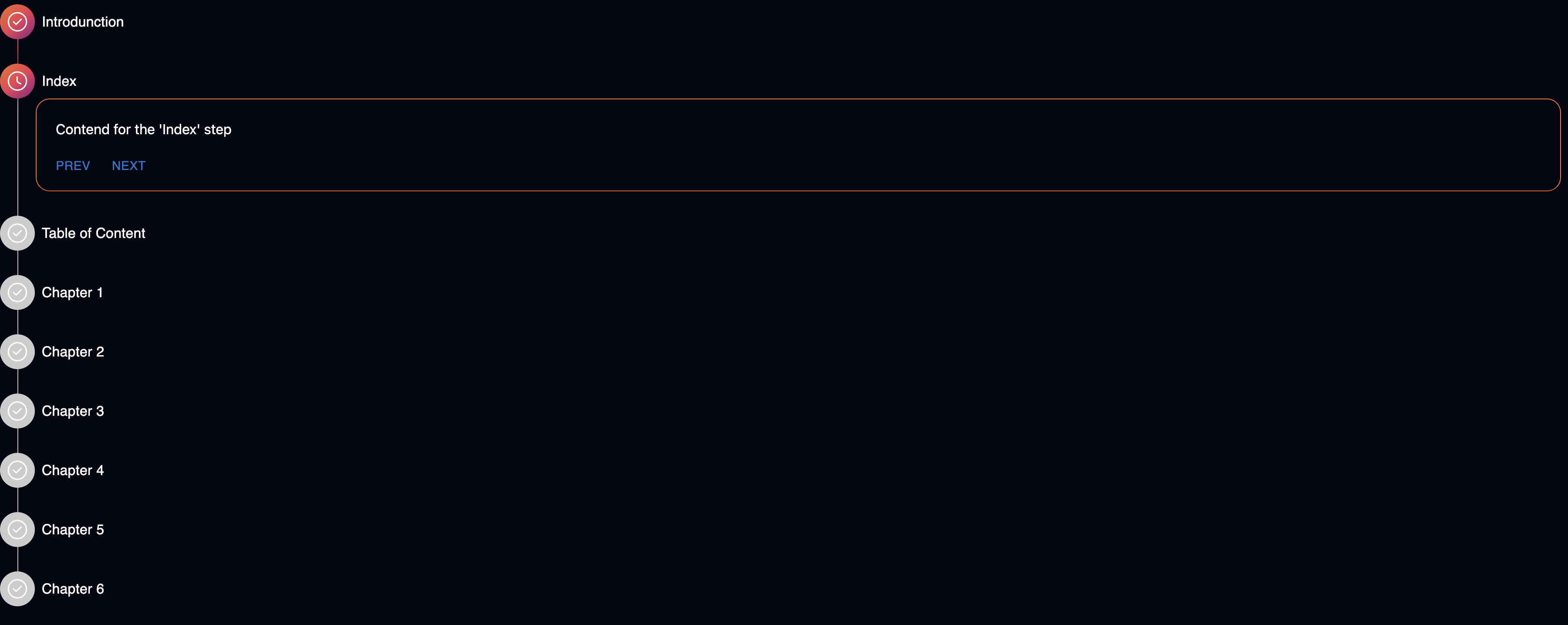
In this post, we’ll walk through how to create a visually appealing vertical stepper component in React using Material UI (MUI) and Tailwind CSS. This component is fully customizable and comes with gradient connectors, icons, and styled content boxes.
ANTLR (Another Tool for Language Recognition) is a powerful parser generator used for reading, processing, and executing or translating structured text or binary files. In this post, you'll learn how to:
Database migrations are essential for maintaining consistency and version control in applications. Flyway is a popular database migration tool that integrates seamlessly with Spring Boot. In this guide, we will set up Flyway in a Spring Boot application and configure it for different environments.
The first step is to update your build.gradle file to include the Flyway dependencies.
Publishing your Android app bundle to the Google Play Store can be streamlined by automating the process with GitHub Actions. In this guide, we’ll walk you through the steps to set up a CI/CD pipeline that builds, signs, and uploads your app to the Play Store.
The first step is to update your build.gradle.kts file to include the signing configuration. This setup ensures that the app is signed with the correct credentials during the build process.
When working with Java Persistence API (JPA), defining entity classes is a critical step to map relational database tables to Java objects. In this post, we’ll explore how to create entity classes for a relational schema, focusing on best practices and solving common challenges such as composite keys.
Spring Boot starters are predefined templates or dependencies that simplify the process of setting up a Spring Boot application. They eliminate the need to manually define numerous dependencies, ensuring compatibility and reducing configuration effort.
Here’s a list of commonly used Spring Boot starters and their purposes:
The Spring Framework is a comprehensive and widely-used framework in the Java ecosystem for building enterprise-level applications. Its core feature is dependency injection (DI), which helps with the loose coupling of components, making applications easier to manage and test. Spring provides many modules for various tasks, like web development, data access, messaging, and more, making it highly modular and suitable for a variety of projects.